How Senate Bill 22 and Local Incentives Are Building a Durable Media Economy
In 2025, the Texas Legislature passed Senate Bill 22 (SB 22) — a transformative piece of legislation that goes far beyond headline rebates and tax credits. It institutionalizes a long-term funding mechanism for the Texas film and media incentive ecosystem, with a projected $1.5 billion committed through 2035 for qualified projects. This isn’t a short-lived stimulus; it’s a structural bet on production as an engine of sustained economic growth. (San Antonio)
At its simplest, SB 22 expands and stabilizes the Texas Moving Image Industry Incentive Program (TMIIIP) — the state’s grant program designed to support film, television, animation, visual effects, commercials, XR, and other media productions that spend in Texas. Grants are tied to actual in-state expenditures, including wages paid to Texas residents, ensuring that spending flows through the local workforce and supply chains. (Texas.gov)
Why This Matters (Beyond Dollars)
State incentives alone are compelling. Nearly every major production hub in the U.S. — from Georgia to New Mexico — competes on these terms. But what makes Texas uniquely attractive today is how SB 22’s certainty interacts with city-level programs, particularly those offered in San Antonio.
The San Antonio Film Commission has updated the city’s incentive structure so that local rebates can be layered on top of state grants. In aggregate, productions shooting in San Antonio may receive a combined incentive package that is among the most competitive nationwide — a meaningful differentiator when production budgets are measured in the tens or hundreds of millions. (San Antonio)
That competitive edge is more than a talking point. When a region can stack incentives predictably and transparently, it lowers risk for producers and opens the door to repeat business — productions that come back, train local crews, and help build a lasting infrastructure rather than one-off engagements.
Film Production Is a Whole-Economy Engine
It’s not just about soundstages or cameras.
When a production sets up in a market, it mobilizes an entire ecosystem. Beyond actors and directors, production touches:
Workforce development: apprentice programs, internships, and trade pathways for carpenters, electricians, plumbers, welders, set builders, millwrights, and specialty fabricators.
Service economies: hospitality, transportation, catering, craft services, dry cleaning, set rentals, equipment logistics.
Creative talent pipelines: students, media grads, and local designers gaining hands-on experience.
These are jobs and business opportunities you don’t typically associate with film production until they show up in your daily economic data.
A study of economic multipliers in film production shows that for every $1 in incentives spent, roughly $4.69 in economic activity returns to the state — encompassing direct production spending, indirect supply chain effects, and induced consumer activity. (Axios)
Production Infrastructure: From Incentives to Reality
The impact of incentives is most visible when real projects anchor themselves in a region. A recent high-profile example is the launch of SGS Studios, a 450,000-square-foot production campus in AllianceTexas, developed by Taylor Sheridan’s SGS Studios in partnership with Paramount Television and Ross Perot Jr.’s Hillwood. The facility, now one of the largest media production campuses in the state, already supports multiple large-scale productions and catalyzes growth in jobs, vendor services, and training opportunities.
This type of infrastructure doesn’t spring up overnight. It follows incentives, workforce capacity, and proven returns. But once established, it becomes self-reinforcing: steady production attracts ancillary businesses, campus expansions, hotel and hospitality demand, and sustained talent growth.
Cultural Impact Meets Economic Strategy
At its core, SB 22 and the incentive ecosystem aren’t just about attracting productions. They’re about embedding media production into the cultural and economic fabric of cities like San Antonio.
When a production chooses a city:
- It creates career pathways for local talent
- It anchors vendor growth across unexpected sectors
- It generates tourism and global visibility through the content itself
- It supports conferences, festivals, and industry gatherings that further reinforce the ecosystem
In January 2026, the Texas Media & Entertainment Summit and Celestial Awards brought this idea into sharp focus. The event convened working professionals, emerging creators, and ecosystem builders precisely at the moment that incentives, production activity, and cultural identity were aligning. It wasn’t about celebrating incentives alone — it was about showing what happens when incentives attract real work, and real work attracts real people. That’s how media industries scale. (See Summits coverage.)
The Takeaway
Senate Bill 22 isn’t a subsidy. It’s infrastructure. By guaranteeing funding and making Texas a predictable partner for production, the state and cities like San Antonio are building a durable film economy that supports both big-budget projects and the creative communities that surround them.
This is how economic impact is sustained: not by chasing the next production, but by building the conditions that make productions want to stay.
Actions . Speak . Louder
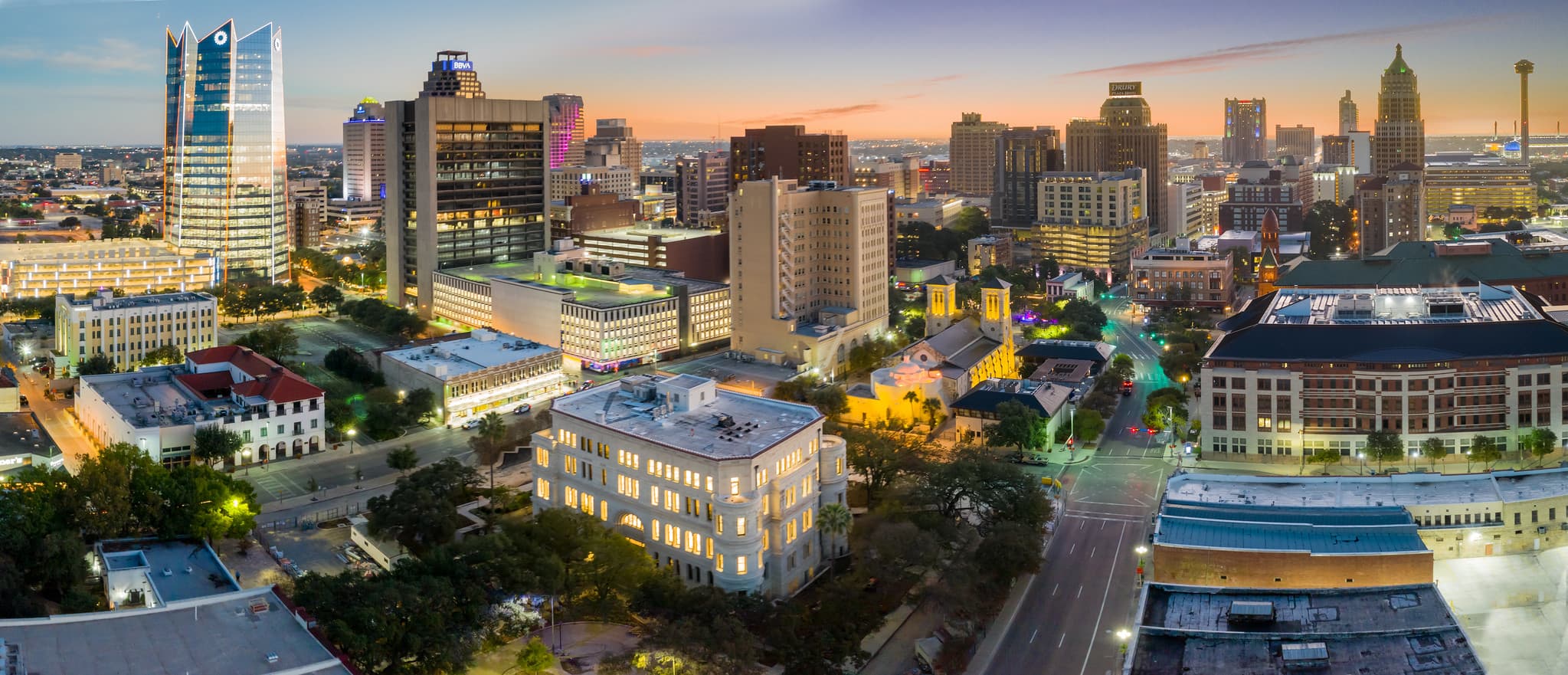
Photo courtesy of the City of San Antonio
